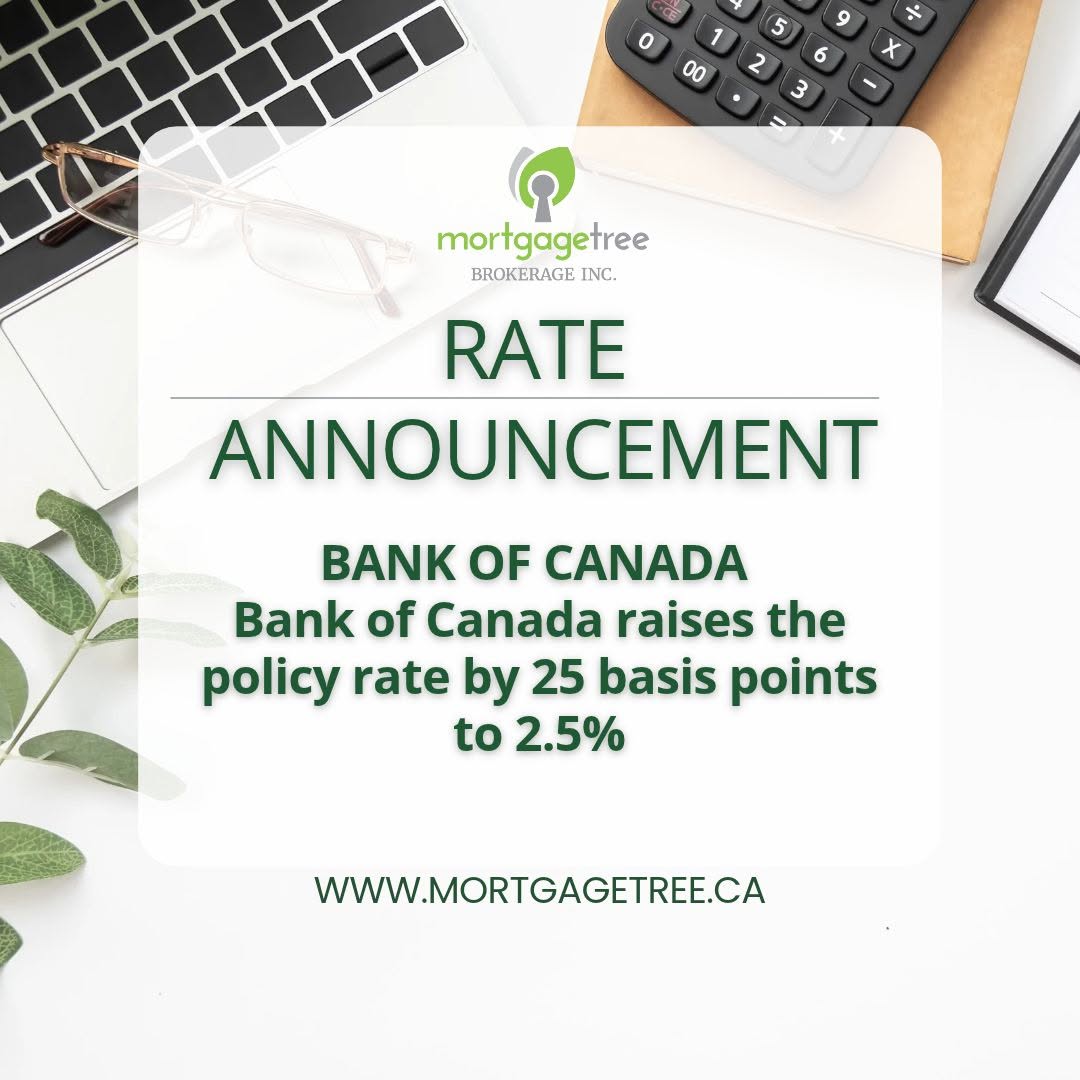
The Bank of Canada made an important move on October 28, increasing its overnight policy rate by 0.25% (25 basis points), from 2.25% to 2.50%. This marked the Bank’s first rate increase since 2023.
The decision reflects renewed concerns about inflation, particularly the impact of persistently high energy prices. Inflation has been running around 3% since April, and the Bank expects it to increase to approximately 3.5% by the end of 2026. Excluding gasoline, however, inflation was 2.2% in September, while measures of core inflation remained close to 2%.
Why Did the Bank Raise Rates?
The Canadian economy has performed somewhat better than the Bank previously expected.
GDP grew by 3.3% in the second quarter, with indicators pointing to approximately 2% growth in the third quarter. Consumer spending has remained solid, business investment has rebounded, and exports have strengthened despite continued challenges in sectors affected by U.S. tariffs.
At the same time, higher oil and energy prices are creating additional inflationary pressure. The Bank’s concern is that these higher costs could eventually work their way into the prices Canadians pay for a wider range of goods and services.
The Bank is currently forecasting Canadian economic growth of 1% in 2026 and 2% in both 2027 and 2028.
What Does This Mean for Your Mortgage?
For homeowners with variable-rate mortgages, the increase can mean higher borrowing costs as lenders adjust their prime rates. The same applies to products such as home equity lines of credit (HELOCs) and other borrowing tied to prime.
For homeowners with an existing fixed-rate mortgage, your current interest rate and payment are generally not directly affected by this Bank of Canada announcement. However, fixed mortgage rates are influenced by the bond market rather than directly by the overnight rate, so the outlook for fixed rates can move differently from variable rates.
For anyone approaching a mortgage renewal, purchasing a home, refinancing or considering breaking an existing mortgage, this is a good reminder that the lowest advertised rate isn’t necessarily the whole story. The right mortgage strategy depends on your remaining term, penalty, current rate, available new rate and your plans for the property.
Should You Choose Fixed or Variable?
There isn’t one answer that’s right for everyone.
After this latest increase, borrowers considering a variable mortgage should be comfortable with the possibility that rates could change again. The Bank has indicated that further policy-rate increases could be necessary, while emphasizing that it will proceed carefully given the uncertainty surrounding the economy.
For some borrowers, the certainty of a fixed payment may be worth considering. For others, maintaining the flexibility of a variable mortgage may still make sense.
The important part is to look beyond today’s rate and understand the overall cost and flexibility of the mortgage.
Our Take
While a rate increase is never welcome news for borrowers, it doesn’t necessarily mean you should immediately change your mortgage strategy.
If you currently have a mortgage, this can be a good time to review your position. In particular, we can look at your current rate, remaining amortization, renewal date, potential penalty and available fixed and variable options to determine whether it makes sense to stay where you are or make a change.
Sometimes the best option is simply to stay the course. In other situations, restructuring a mortgage can improve monthly cash flow or create longer-term savings.
Every mortgage is different, and that’s where good advice matters.
If your mortgage is coming up for renewal, you’re considering a move, or you’d simply like to know how the latest rate increase affects you, reach out to the Mortgage Tree team. We’re happy to review the numbers and help you understand your options.
Mortgage Tree Brokerage Inc.